
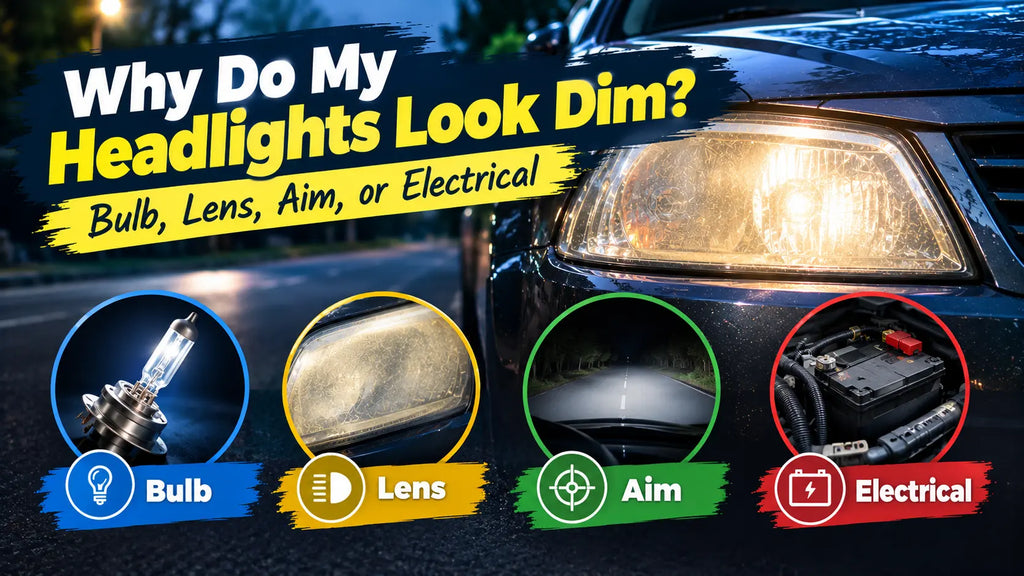
Why Headlights Look Dim: Bulb, Lens, Aim or Electrical
Dim headlights are easy to ignore because the change is so gradual. You get used to it, and then one night on an unlit road you realize you cannot see as far as you used to. The cause is not always the bulb. Dim headlights usually trace back to one of four things: the bulb, the lens, the aim, or the electrical system. This guide shows you how to tell them apart, starting with the cheapest and easiest checks.
Why Dim Headlights Are Easy to Miss
Headlights tend to fade on both sides at the same pace, so there is no obvious difference to catch your eye. City streets are well lit, which hides the problem further. Many drivers only notice when they are on a dark rural road, driving in rain, or following a newer car whose beams reach noticeably farther. A good habit is to park facing a wall every few months and look at the beam pattern. Changes are far easier to spot when you have a regular point of comparison.
Start With What You Can See
Before you replace anything, compare. Park facing a garage door or wall at night and switch on your low beams. Does one side look dimmer than the other, or a different color? A difference between left and right usually points to a part-specific problem, such as a bulb, a connector, or one lens.
If both sides look equally weak, the cause is probably something they share: two aging bulbs, two hazy lenses, or an electrical issue. Also look at the lenses in daylight. Wipe off any dirt first, then check whether the plastic looks clear or yellow and frosted.
Cause 1: Aging Bulbs
Halogen bulbs lose brightness gradually over their life, well before the filament actually burns out. Because the decline is slow, many drivers never notice it. Common signs include a warmer, yellower beam, one side that looks weaker than the other, and bulbs that have been in the car for a long time.
The fix is simple. Replace the bulbs, ideally both at once so the color and brightness match, and use the type listed in your owner's manual. Be careful with aftermarket upgrades. A bulb that is not designed for your headlight housing can scatter light and cause glare for other drivers, so choose products made for your housing and check the aim afterward.
Cause 2: Cloudy or Dirty Lenses
The bulb can be perfect and the beam can still be weak if the plastic lens in front of it is hazy. Headlight lenses are plastic with a protective coating, and sun exposure slowly wears that coating away. What is left is a yellow, frosted surface that scatters light instead of focusing it.

A simple test is to wash the lens thoroughly. If the haze is still there afterward, it is oxidation on the surface rather than dirt. Fogging that appears behind the lens, or water droplets inside, is a different problem. That is a failed housing seal, and it needs to be dried and resealed or replaced. See Foggy Headlights Inside vs. Oxidized Outside to tell the two apart.
If the haze is on the outside surface, treating the lens can help. Our headlight restoration kit is one complete 3-step treatment for both headlights, takes about 2 minutes per headlight, and the results last several months. Our DIY Headlight Restoration: The Complete Guide explains the full process.
Cause 3: Poor Aim
Aim affects how far ahead you can see even when the bulbs are bright. Beams that point too low light up only the road right in front of the car. Beams that point too high blind oncoming drivers, and you may notice people flashing their lights at you.
Aim can drift after suspension work, after regularly carrying a heavy load, after a minor front-end bump, or if a bulb was not seated properly when it was replaced. On the garage door, look for a beam pattern that sits oddly low or high, or for left and right beams that do not match in height.
Your owner's manual explains the correct adjustment procedure for your vehicle. Many shops can adjust aim quickly, and it is worth leaving it to them if you are not sure what you are doing.
Cause 4: Electrical Problems
If both headlights are dim, if they flicker, or if they get brighter when you rev the engine, the electrical system deserves a look. Common culprits include corroded or loose connectors at the bulb socket, a poor ground connection, a weak battery, or a charging system that is not keeping up.
- Flickering or lights that dim and brighten on their own.
- Headlights that are dim at idle and brighten at higher engine speed.
- Discolored or melted plastic on a connector.
- Other symptoms, such as slow window motors or dimming dashboard lights.
Electrical faults can involve wiring and the charging system, so have a qualified technician diagnose them instead of guessing. A battery and charging test is usually quick.
Quick Diagnosis Guide
| What you notice | Likely cause | What to do |
|---|---|---|
| One headlight dimmer than the other | Aging bulb or poor connector | Replace the bulb, inspect the connector |
| Both dim, with a warm or yellow beam | Aging bulbs | Replace both bulbs |
| Scattered beam, cloudy lens | Oxidized lens | Treat the lens surface |
| Fog or droplets behind the lens | Failed housing seal | Dry and reseal, or replace the housing |
| Short or uneven beam on a wall | Poor aim | Check the aim or visit a shop |
| Flickering, or dim at idle | Charging or electrical fault | Have a technician test it |
A Simple Order of Operations
Work from the cheapest and easiest check to the hardest so you do not spend money on the wrong part:
- Clean the lenses and compare the left and right beams on a wall at night.
- Look at the lenses in daylight for yellowing or haze.
- Replace old bulbs in pairs.
- Check the beam pattern and aim.
- If the lights are still dim or flicker, have the electrical system tested.
Often more than one cause is at work at the same time. Our guide on how to improve night driving visibility explains how these causes combine to reduce what you can see after dark.
When to See a Professional
Some symptoms are worth taking straight to a technician: persistent flickering, a burning smell, melted connectors, bulbs that keep burning out, or headlights that dim whenever another electrical load switches on. These can point to wiring or charging problems that are not safe or practical to chase down yourself.
|

Frequently Asked Questions
Why do my headlights look dim even with new bulbs?
The bulb is not always the cause. Hazy lenses, poor aim, or an electrical issue can all make a beam look weak, even with a brand new bulb.
Is it normal for headlights to dim with age?
Yes. Halogen bulbs lose brightness slowly over time, and plastic lenses degrade from sun exposure. Replacing old bulbs and checking the lenses usually makes a noticeable difference.
Should I replace both bulbs at the same time?
Generally, yes. Replacing them together keeps the color and brightness matched from side to side.
How can I tell if the problem is electrical?
Flickering, lights that are dim at idle and brighter when you rev the engine, melted connectors, or other electrical oddities all point that way. A battery and charging test is a sensible next step.
Can bad aim make headlights seem dim?
Yes. Beams that sit too low shorten how far ahead you can see, even when the bulbs themselves are bright.