
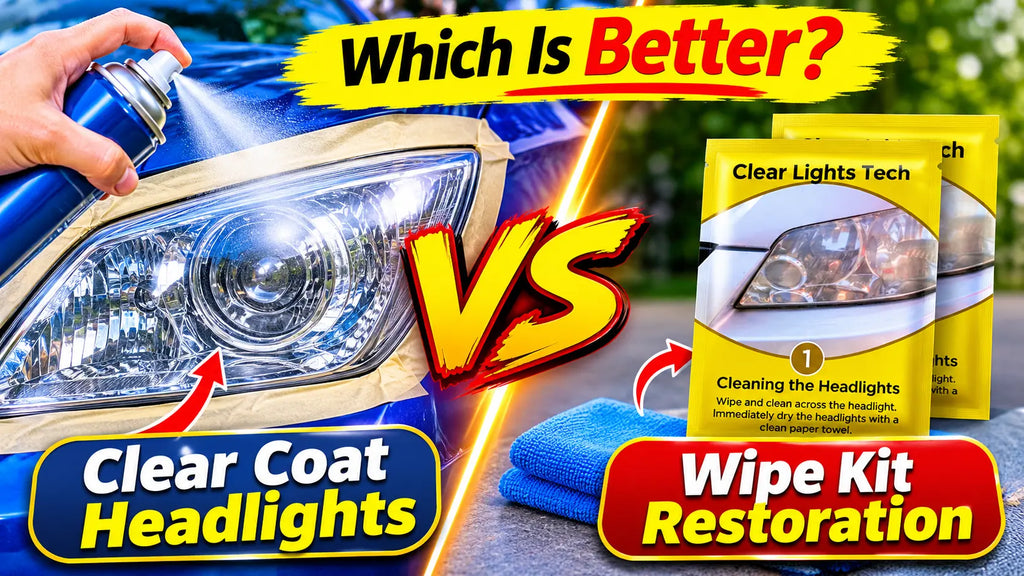
Clear Coat Headlights vs Wipe Kit: Which Is Better?
If your headlights are yellow, hazy, or peeling, you may have come across another option: spraying them with a clear coat. It sounds logical. The headlight lost its protective coating, so why not put a new one on? The answer is that you can, but it is a very different job from using a wipe-on restoration kit. This guide compares the two honestly, explains what each involves, and helps you decide which one suits your headlights and your skills.
The Short Answer
Yes, you can clear coat headlights, and professionals do it. But a clear coat only works on a properly prepared surface. That means the old failed coating and all the oxidation have to be removed first, usually by sanding. If the surface is not prepared correctly, the new coat can fail to bond, peel, or turn cloudy. A wipe kit takes a simpler route: it removes the oxidation chemically and seals the lens, with no sanding and no spraying.
Why People Consider Clear Coat
Headlights leave the factory with a clear, UV-resistant coating. When that coating wears away, putting a new one on feels like the obvious repair. That is why clear coating shows up in so many do-it-yourself videos. The idea is sound, but the coating is only half the job. The preparation underneath decides whether it holds, and that is where most of the time and skill go.
What Spray Clear Coat Involves
Clear coating a headlight is a small refinishing project. A typical process looks like this:
- Mask the paint and trim around the headlight so overspray does not land on them.
- Remove the old coating and oxidation, usually by wet sanding through progressively finer grits.
- Clean and degrease the lens so nothing interferes with adhesion.
- Apply several thin, even coats of a UV-resistant clear coat made for automotive plastic.
- Let the coating cure fully before exposing it to water or driving the car.
- Polish the surface if needed to even out the finish.
Each step matters. Skipping or rushing any one of them can spoil the result.

What a Wipe Kit Does
A headlight restoration kit is one complete 3-step treatment for both headlights: clean each headlight with its own No.1 wipe, dry it with a paper towel, and coat both headlights with the single No.2 UV wipe. It takes about 2 minutes per headlight, and the results typically last six to twelve months. Do not touch or wet the lenses for 30 minutes afterwards. There is no sanding, no masking, and no spraying. Our guide on how to restore headlights without sanding covers the approach in more detail.

Spray Clear Coat vs. Wipe Kit Side by Side
| Comparison | Spray clear coat | Wipe kit |
|---|---|---|
| What it does | Applies a new coating layer | Removes oxidation and seals the lens |
| Sanding needed | Yes, to remove the old coating | No |
| Skill and setup | Higher: masking, sanding, spraying | Low: wipe-on steps |
| Time | Several hours, plus cure time | About 2 minutes per headlight |
| Risk of mistakes | Runs, orange peel, poor bonding | Lower, mostly uneven application |
| Peeling or pitted lenses | Can be an option after the failed coating is removed | Not designed for peeling coating |
| Durability | Can last longer if done well | Typically six to twelve months |
Where Clear Coat Can Go Wrong
A well-applied clear coat can be durable, but it is less forgiving than a wipe-on treatment. Common problems include:
- Spraying over oxidation or old coating, which can cause the new coat to peel or turn cloudy.
- Applying coats too thick, which leads to runs and sags.
- A bumpy, orange-peel texture from the wrong spray distance or conditions.
- Dust, bugs, or moisture landing in wet coating, especially outdoors.
- Using a clear coat that is not UV resistant, which can yellow in the sun.
- Not allowing enough cure time before getting the lens wet.
Mistakes are also harder to undo. A bad clear coat usually has to be sanded off and the whole process repeated. Our article on why DIY headlight restoration fails covers mistakes that apply to both methods.
When Clear Coat Makes Sense
Clear coating is worth considering in a few situations:
- The factory coating is peeling or flaking, and a wipe kit is not designed to fix that.
- The lens has damage that needs refinishing, not just a surface treatment.
- You are comfortable with sanding and spraying, or you can hire a professional refinisher.
- You want to invest the time to get the longest-lasting result you can.
When a Wipe Kit Makes More Sense
For the most common problem, yellow or hazy headlights caused by oxidation, a wipe kit is usually the simpler choice. You do not need tools or a spray area, the treatment is quick, and it is easy to repeat later. It suits people who want a clear lens without a weekend project. Our Headlight Restoration: The Complete DIY Guide covers the whole process.

How to Decide in Three Questions
- Is the lens peeling, flaking, or deeply pitted? If so, a surface treatment alone will not fix it, and refinishing or replacement is worth considering.
- Are you comfortable sanding, masking, and spraying, or willing to pay someone who is? If not, a wipe kit is much easier to get right.
- How much time do you have? A clear coat project takes hours plus cure time. A wipe kit takes a few minutes.
Can You Use Both?
It is best to choose one approach rather than stacking them. A sealant applied by a wipe kit is meant to be the final layer, and spraying a clear coat over it can cause adhesion problems. If you plan to clear coat, remove the old coating and prepare the lens properly first. If you are unsure, ask the maker of the clear coat what it needs to bond to.
Safety and Prep Notes
If you decide to spray, work in a well-ventilated space away from heat and flames, wear eye protection and a respirator suited to the product, and follow the directions on the label. Some automotive clear coats release fumes that need proper protection. Cover your car, tools, and surroundings, and choose a calm, dry day if you are working outside.
When Neither Is the Answer
Cracks, moisture trapped inside the housing, and deep damage may mean the headlight needs replacing. Our article on headlight restoration versus replacement can help you decide.
|

Frequently Asked Questions
Can I just spray clear coat over my cloudy headlights?
No. Clear coat needs a properly prepared surface. If you spray over oxidation or an old failing coating, the new coat can fail to bond and peel or turn cloudy.
Is clear coat better than a restoration kit?
It depends. A well-applied clear coat can last longer, but it takes more skill, time, and equipment. A wipe kit is faster and simpler for typical oxidation.
Do I have to sand headlights before clear coating them?
Usually, yes. The old coating and oxidation need to be removed so the new coat can bond. Skipping this step is a common cause of failure.
Can I use regular automotive clear coat on headlights?
Use a clear coat made for automotive plastic and rated for UV exposure, and follow its directions. A coat without UV protection can yellow in the sun.
What should I do if my headlight coating is peeling?
A wipe kit is not designed to re-bond a coating that has failed. Options include removing the failed coating and refinishing the lens, having a professional do it, or replacing the headlight.