
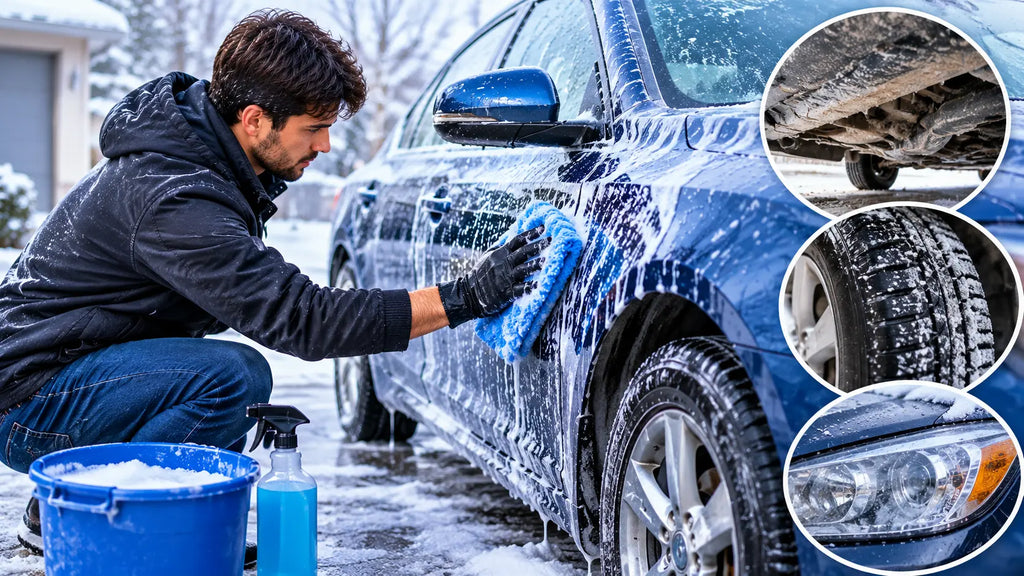
Winter Car Washing and Road Salt: How to Protect Your Car
Washing a car in winter feels pointless when it will be filthy again by tomorrow. But road salt is one of the hardest things your car faces all year, and leaving it on the paint and underbody for months is an invitation for rust. You do not need to wash constantly or in perfect weather. You just need to wash at the right times, in the right places, and protect the parts that can freeze or corrode. This guide explains how to do all of that without turning it into a chore.

Why Road Salt Is Hard on Cars
Salt lowers the freezing point of water, which is why it works on roads. On your car, it does something less helpful: it keeps moisture sitting on metal and speeds up corrosion. The problem is worst where you cannot see it, such as the underbody, frame, suspension parts, brake components, and inside the wheel wells.
Salt keeps working as long as it stays on the car. A film that dries on the paint in January is still there in March, and it is still doing damage. That is why waiting for spring to wash a salty car is not a good plan.
How Often Should You Wash in Winter?
There is no perfect schedule, but a few rules of thumb help. Wash after a heavy salting or after a storm when the roads were treated. If the weather allows, pick a day when the temperature is above freezing so water can drain and dry. In a long cold stretch, wash whenever you get a chance, because a salty car left alone for weeks is worse than a car washed in cold weather and dried properly.
Where Salt Hides
| Area | Why it matters | How to clean it |
|---|---|---|
| Underbody and frame | Hard to see, easy to corrode | Undercarriage spray at a car wash |
| Wheel wells | Collects wet salty slush | Rinse thoroughly from several angles |
| Lower body panels | Receives the most spray | Wash from the top down, finish low |
| Door jambs and sills | Trap water and grit | Open the doors and wipe them down |
| Wheels and brakes | Salt and brake dust mix | Rinse and clean the wheels last |
| Interior floor | Boots carry salt inside | Vacuum and clean the carpets |
Your Washing Options
Automatic wash
A drive-through wash is the easiest choice in cold weather, and many offer an undercarriage spray, which is the most valuable add-on in winter. An automatic wash that uses no brushes is gentler on paint that already has grit on it. Drive a short distance afterward so the air and the engine heat help dry the car.
Self-serve bay
A self-serve bay lets you aim the spray exactly where salt collects. Start with the wheel wells and underbody, then rinse the body from the top down. Keep the nozzle at a sensible distance from paint chips and rubber seals, because high pressure at close range can lift flaking paint or force water into places it should not go.
Hand wash
If you wash at home, use a mitt, a bucket of soapy water, a second bucket for rinsing the mitt, and car soap rather than dish soap, which can strip wax. Rinse the car first to remove loose grit before you start scrubbing the paint. Wash from the top down and clean the wheels last. Rinse often so the soap does not dry on the paint, and dry the car with a clean microfiber towel, especially around the mirrors, handles, and seals.
Protect Seals, Locks, and Brakes After Washing
The risk of washing in cold weather is that water freezes in places you need to move. A few minutes of care afterward prevents that:
- Wipe water from the door seals, door jambs, and trunk and hood edges with a dry towel.
- Apply a silicone spray or rubber conditioner to the seals so they are less likely to freeze to the frame.
- Open and close each door a few times to check that nothing is sticking.
- Use a lock lubricant or de-icer on locks that tend to freeze.
- Drive a short distance and press the brakes gently a few times to help dry them.
Do Not Forget the Interior
Salt gets inside on your boots and leaves white stains on the carpet. All-weather rubber mats catch most of it and are easy to rinse. For stains already in the carpet, a mix of equal parts white vinegar and warm water usually helps. Test it on a small hidden spot first, blot the stain, then rinse with clean water and let the area dry. Damp carpet also feeds window fog, so dry it as completely as you can. If your glass fogs anyway, see how to defrost a foggy windshield.
Headlights and Glass
Salt spray and slush leave a film on your lights and windows, so clean the lenses and glass whenever you wash. If the lenses still look cloudy afterward, the plastic itself has aged, and our guide on headlight cleaner versus a restoration kit explains the difference. Our headlight restoration kit is one complete 3-step treatment for both headlights, takes about 2 minutes per headlight, and the results last several months. Our DIY Headlight Restoration: The Complete Guide covers the whole process. For the rest of your winter visibility, see our Winter Car Visibility Checklist.
|

Prepare Before the First Snow
The best time to protect your car from salt is before the first storm. A fresh coat of wax or paint sealant gives the paint a barrier that makes salt easier to rinse off. Put all-weather mats in the footwells, keep a plastic scraper and a snow brush in the car, and fill the washer reservoir with winter-rated fluid. A garage does not need to be heated, but being able to dry the car indoors for even a few minutes helps. Preparing before winter makes every later wash faster and more effective.
Common Mistakes to Avoid
- Waiting until spring to wash off a winter of salt.
- Skipping the underbody, where salt does the most hidden damage.
- Washing in freezing weather without drying the seals and locks.
- Using a pressure washer too close to paint chips and rubber seals.
- Leaving wet floor mats in the car overnight.
Frequently Asked Questions
Is it okay to wash my car in freezing weather?
It can be, if you dry the door seals, locks, and edges afterward and drive a short distance to help everything dry. If you can wait for a day above freezing, that is easier.
Does road salt really damage paint?
Salt itself is mostly a problem for exposed metal and the underbody, but a salty film that stays on the paint can contribute to dulling and speeds up corrosion in any chip or scratch. Washing it off regularly is the best defense.
Is an undercarriage wash worth it?
Yes. The underbody is where salt does the most damage and where you are least likely to see it, so an undercarriage spray is one of the most useful things you can add in winter.
Should I use dish soap to wash my car?
No. Dish soap can strip wax and sealant. Use a soap made for cars.
How do I stop my car doors from freezing shut?
Wipe the seals dry after washing and treat them with a silicone spray or rubber conditioner. That helps keep the rubber from sticking to the frame.