
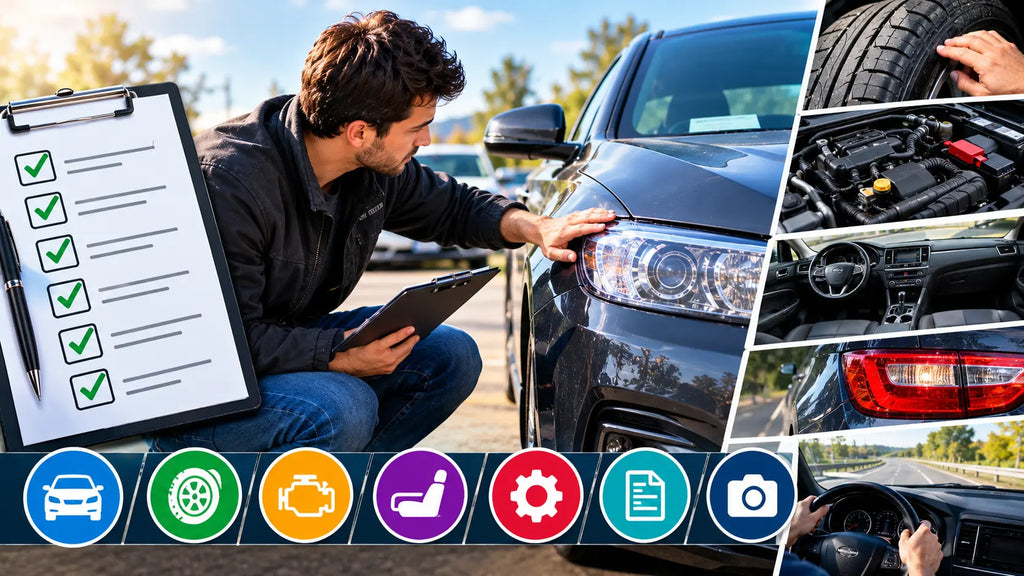
Used-Car Inspection Checklist: What to Check Before You Buy
Buying a used car can save you money, but only if you find the problems before you hand over the cash. A seller will always show you the best side of the car. Your job is to look at everything else. This checklist walks you through the walkaround, the interior, the engine bay, the test drive, and the paperwork, so you know what to look at and what should make you pause. It does not replace a professional inspection, but it helps you decide which cars deserve one.
Before You Go
Good inspections start at home. Ask the seller for the VIN and run a vehicle history report. Check whether the car has any open safety recalls using your country's official recall lookup. Ask for service records, and ask why the owner is selling.
Plan to view the car in daylight and in dry weather, because rain and darkness hide scratches, dents, and paint flaws. Bring a flashlight, a few paper towels, and a friend who can watch the lights while you check them.
Used-Car Inspection at a Glance
| Area | What to check | Red flags |
|---|---|---|
| Exterior body | Panel gaps, paint match, rust | Uneven gaps, overspray, bubbling paint |
| Tires | Wear pattern, age, brand match | Uneven wear, cracks, mismatched tires |
| Glass and lights | Chips, cracks, every bulb | Cracks, dead bulbs, moisture in lenses |
| Interior | Switches, seats, smells, warning lights | Damp carpet, musty smell, lights that stay on |
| Engine bay | Fluids, belts, hoses, battery | Leaks, frayed belts, corroded terminals |
| Underneath | Frame, exhaust, drips | Fresh drips, heavy rust, damaged parts |
| Test drive | Steering, brakes, shifting, noise | Pulling, vibration, hard shifts |
Walk Around the Exterior
Walk slowly around the car and look down each side from the front and the back. The panels should line up, the gaps between them should be even, and the paint color should match everywhere. Differences can point to accident repair. Look for overspray on rubber seals and trim, and for rust bubbles around the wheel arches, door bottoms, and rocker panels.
Check the tires. Wear should be even across each tire. Uneven wear can point to alignment or suspension issues. Look at the sidewalls for cracks, and check whether all four tires are similar. A car with mismatched, worn tires may need a set soon, which is worth knowing before you negotiate.
Check the Glass and Lights
Look for chips and cracks in the windshield and make sure the wipers clear the glass cleanly. Then have your friend watch while you test the low beams, high beams, turn signals, brake lights, hazards, and reverse lights. Look inside the lenses for moisture, which can point to a failed seal.
Cloudy or yellow headlight lenses are a common find on used cars, and cloudiness on the outside surface is usually a cosmetic and visibility issue rather than a reason to walk away. Our headlight restoration kit is one complete 3-step treatment for both headlights, takes about 2 minutes per headlight, and the results last several months. Our DIY Headlight Restoration: The Complete Guide covers the whole process.
If you live somewhere that requires an inspection before a sale or registration, see our article on whether oxidized headlights can fail a safety inspection.
|


Inspect the Interior
Sit in every seat and use your nose. A musty smell or damp carpet can point to a leak or past flooding. Test every switch: windows, locks, mirrors, seat adjusters, the sunroof, the radio, the heat, and the air conditioning. Check the seat belts and look at the wear on the pedals, steering wheel, and driver's seat. The wear should fit the mileage.
Turn the key to the on position without starting the engine. Warning lights should come on and then go off after the engine starts. A light that never comes on, or one that stays on, is worth asking about.
Look Under the Hood and Underneath
Ask to start the engine cold, since problems often show on a cold start. Before you start it, check the oil level and color, and look at the coolant, brake fluid, and washer fluid. Look at the belts and hoses for cracks or fraying, and at the battery terminals for corrosion.
Safety first: Follow the owner's manual for fluid checks. Never open a hot cooling system, keep hands clear of moving engine parts, and never crawl under a car supported only by a jack.
Listen when the engine starts. Rattles, knocks, and squeals are worth noting. Watch the exhaust for heavy smoke. Then look under the car with your flashlight for fresh drips, heavy rust on the frame, and damaged or hanging parts.
Take a Proper Test Drive
Drive the car on a mix of roads: slow streets, bumps, and a highway if possible. Turn the radio off so you can hear the car. Pay attention to these things:
- Does the car track straight, or does it pull to one side?
- Do the brakes feel firm, and does the car stop in a straight line?
- Does the transmission shift smoothly without jerks or delays?
- Do you hear clunks over bumps or humming at speed?
- Does the air conditioning blow cold and the heater blow warm?
- Does the steering feel tight, without vibration through the wheel?
Test the parking brake and reverse before you hand the keys back.
Check the Paperwork
Make sure the VIN on the dashboard, the door jamb, and the paperwork all match. The name on the title should be the seller's name. Ask about liens, and check your local rules for what a title should show. Look at the service records and confirm that the maintenance fits the mileage and the age of the car. If you are the one selling, our guide to cheap pre-sale car prep fixes ranked by buyer impact shows what sellers do to get a car ready.
Get a Professional Inspection
If the car passes your own checks, pay an independent mechanic to inspect it. The fee is small compared with the cost of the car, and a mechanic can see things you cannot, such as frame damage, worn suspension parts, and hidden leaks. The report is also a fair basis for negotiating, and a seller who refuses to allow an inspection is a red flag.

Red Flags Worth Walking Away From
- The seller refuses an independent inspection.
- The VIN on the car does not match the paperwork.
- The title has problems, or the seller is not the owner on the title.
- Signs of flooding, such as silt, rust under the dashboard, or a strong musty smell.
- Pressure to decide quickly or to pay in a hurry.
Frequently Asked Questions
Do I need a mechanic to inspect a used car?
It is strongly recommended. Your own checklist helps you screen out bad cars, but a mechanic can see problems under the car and in the mechanical systems that are hard to judge in a driveway.
What should I bring when I look at a used car?
A flashlight, paper towels, a notepad, this checklist, and a friend. Also bring your driver's license and proof of insurance for the test drive.
How long should a test drive be?
Long enough to try a mix of roads and speeds. A short loop around the block does not reveal much, so ask for a route that includes bumps, turns, and the highway.
Are cloudy headlights a deal breaker?
Usually not. Cloudiness on the outside surface of the lens is a common, fixable issue. Moisture inside the lens is different and may point to a seal problem, so ask about it.
What is the biggest red flag when buying a used car?
A seller who will not let you have the car inspected, or paperwork that does not match the car. Either one is a reason to walk away.