
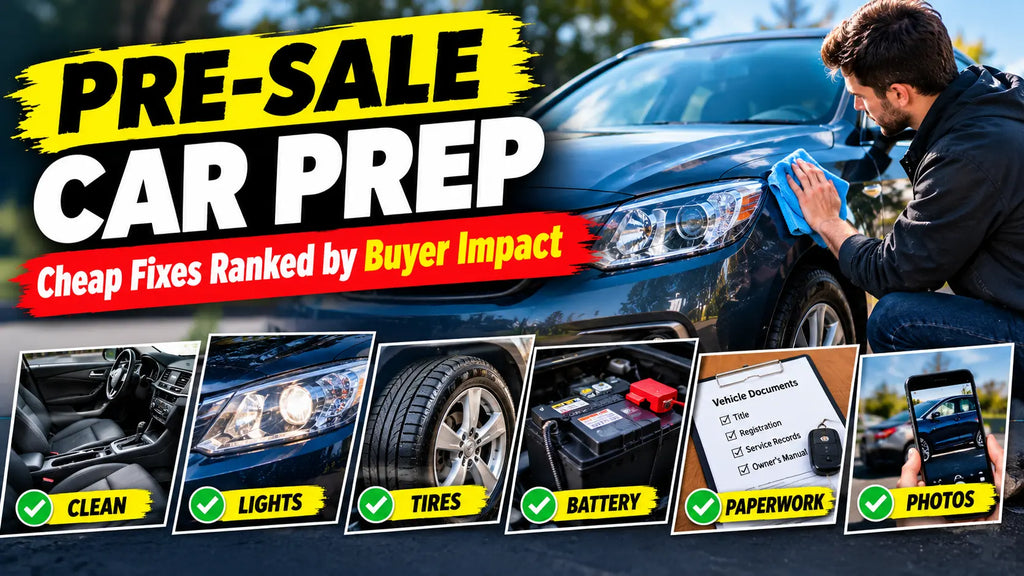
Pre-Sale Car Prep: Cheap Fixes Ranked by Buyer Impact
Selling a car is mostly about first impressions. Before a buyer asks about mileage or service history, they have already walked around the car, looked inside, and formed an opinion. The good news is that many of the things buyers notice first are cheap and quick to fix. This guide ranks the most worthwhile pre-sale fixes, starting with the ones that are easiest to see and cost the least. It makes no promises about price, but it will help you present your car honestly and in its best light.
How We Ranked These Fixes
This ranking is a judgment call, not a study. We ordered the fixes by how visible they are to a buyer at a glance, how little they cost, and how quickly you can do them. A fix that shows up in listing photos and takes an afternoon ranks higher than one that costs a lot and is hard to notice. Your car may be different, so adjust the order to fit it. If the interior is spotless but the paint looks dull, move the exterior work up.
| Rank | Fix | Effort | Why buyers notice |
|---|---|---|---|
| 1 | Deep clean inside and out | Low | Seen in every photo and walkaround |
| 2 | Remove odors and clutter | Low | Smell is noticed immediately |
| 3 | Working, clear lights | Low | Shows the car has been looked after |
| 4 | Clean glass and good wipers | Low | Affects photos and the test drive |
| 5 | Wheels and tires | Low to medium | Visible from every angle |
| 6 | Small cosmetic fixes | Low to medium | Removes easy things to criticize |
| 7 | Paperwork and records | Low | Builds trust during negotiation |
| 8 | Good listing photos | Low | Decides whether people come to see it |
1. Deep Clean Inside and Out
A thorough wash and vacuum is the best use of a weekend. Wash and dry the body, clean the wheels, vacuum the carpets and seats, and wipe down the dashboard, door panels, and cup holders. Pay attention to the places buyers look: door jambs, the trunk, under the floor mats, and the area around the pedals. If cloth seats have stains, a rental carpet cleaner or an upholstery spray is inexpensive and often works well. Clean the car again right before each showing, because a car that was spotless last week may not be today.

2. Remove Odors and Clutter
Smell is one of the first things a buyer notices, and an air freshener rarely hides it. Find the source instead. Remove old food, check under the seats, and clean up spills. Odors from smoke or pets may need a cabin cleaner made for the job or a professional detail. Take out your personal items too. An empty glovebox, trunk, and console let buyers picture themselves in the car.
3. Lights That Work and Look Clear
Walk around the car and test every light: headlights, brake lights, turn signals, hazards, and reverse lights. Replace any burned-out bulb. For many cars, this is a relatively inexpensive fix, and a dead bulb is an easy thing for a buyer to point at. Then look closely at the headlight lenses. Cloudy or yellow lenses make a car look older and less cared for. For exterior lens haze, our headlight restoration kit is one complete 3-step treatment for both headlights, takes about 2 minutes per headlight, and delivers results that last several months. Our DIY Headlight Restoration: The Complete Guide covers the whole process. Restoration is not a substitute for repairing damaged lights or electrical faults.
Rules vary by location, but in areas that require an inspection to sell or register a car, headlight condition can matter. Read our article on whether oxidized headlights can fail a safety inspection for details. For a closer look at how much clear headlights matter to buyers and dealer appraisers, see does headlight condition affect resale or trade-in value.
|

4. Clean Glass and Good Wipers
Clean the inside and outside of every window. Interior haze shows up badly in photos and in low sun on a test drive. Replace wiper blades that streak or skip, which is an inexpensive fix. Also check the windshield for chips. A small chip can often be repaired for a modest cost, while a crack that spreads may mean a replacement, so ask a glass shop about your options before you list the car.
5. Wheels and Tires
Wheels and tires are visible from every angle. Clean the wheels, remove the brake dust, and apply a tire dressing if you like the look, keeping it off the tread and braking surfaces. Check cold tire pressures against the vehicle's placard, and look honestly at the tread and tire condition. Buyers often check the tires, and worn or mismatched tires are a common negotiating point. Do not replace tires solely for appearance, but have damaged or unsafe tires assessed before offering a test drive.
6. Small Cosmetic Fixes
Small flaws give buyers easy reasons to ask for a lower price. Fill small paint chips with a paint pen made for your car's color code, polish light surface scratches with a suitable product according to its directions, and tighten or reattach loose trim. Replacing a missing gas cap or hubcap may also be inexpensive. Do not take on large dents or deep scratches unless you have a quote. A body shop estimate will tell you whether the repair is worth it.
7. Paperwork and Records
Gather your title, registration, service records, and the owner's manual, and find the spare key. A folder of receipts shows that the car was maintained, and it makes questions easier to answer. If your area requires an inspection or emissions report for a sale, include it. Check your local rules for what a seller must provide.
8. Photos and Your Listing
Wash the car first and photograph it in soft daylight, such as early morning or late afternoon. Take the front, rear, both sides, the interior, the dashboard, the odometer, the engine bay, and the trunk. Show any flaws honestly, because buyers trust listings that show the car as it is. Write a clear description of the mileage, condition, service history, and the reason you are selling.
What Not to Spend Money On
Not every repair pays for itself. Before committing to large mechanical repairs, major bodywork, or expensive wheels, get a quote and compare the cost with the likely benefit. You may not recover what you spend. Price the car honestly for its condition and explain known issues. A pre-sale inspection at a shop can help separate cosmetic concerns from problems that affect safe driving.
Start here: Clean and declutter the car, check the lights and tires, gather your records, and then take clear, honest photos. Prioritize safety concerns over cosmetic improvements.
Frequently Asked Questions
What is the cheapest way to improve a car's first impression?
A thorough clean inside and out. It costs very little and shows up in every photo and walkaround.
Should I fix mechanical problems before selling?
Small, cheap fixes are often worth doing. For larger repairs, get a quote and compare it with what you expect to gain. Have safety-related problems assessed before a test drive, and be honest about known issues in your listing.
Do cloudy headlights matter when selling a car?
They can make a car look older and less cared for. Exterior haze may be suitable for restoration, while cracked lenses, internal damage, or electrical faults need a different repair. Our guide on headlight condition and resale value covers this in detail.
Should I detail the car myself or pay a professional?
Most cars can be cleaned well at home. A professional detail is worth considering for strong odors, heavy stains, or if you simply do not have the time.
What paperwork do I need to sell a car?
Usually the title, registration, and any required inspection or emissions reports, plus service records, the owner's manual, and the spare key. Requirements vary, so check your local motor vehicle agency.